Understand Solar. Make Informed Choices.
Explore sunlight, understand the tradeoffs, and learn whether small solar could work for you.
Breaking Down
Barriers to
Solar Energy.
California’s Senate Bill 868, the Plug and Play Solar Act, aims to make small-scale solar energy more accessible by reducing regulatory barriers. Its new provisions take effect on January 1, 2027.
Traditional rooftop solar isn’t right for everyone. Plug-in solar could reach more households, but finding a suitable setup still starts with practical questions: Is there a suitable place for panels? How much sunlight reaches it? What equipment would fit, and what could it cost? The answers depend on your home, your electricity use, and the requirements that apply to your proposed setup.
NeoSolar brings these questions together in one place. Learn about the law, explore sunlight around your home, compare panel setups, and test savings scenarios. Use what you discover to build a solar plan and identify what to check before purchasing.
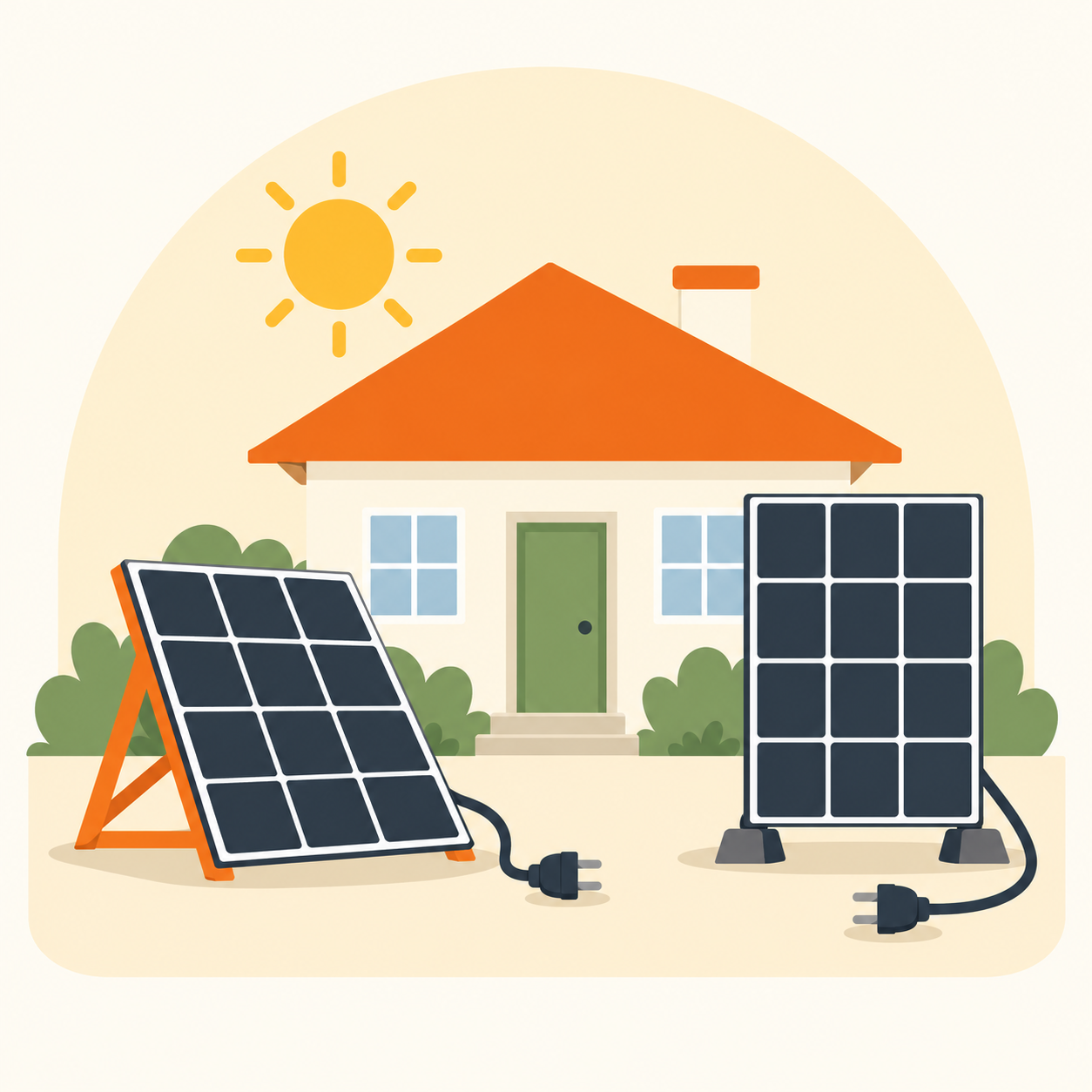
Plug-in Solar. More Access. New Possibilities.
Explore Your Solar Potential in 4 Steps
Select each step below to open its section and build on what you learned in the previous step.
Explore Your Location
Choose an outdoor panel spot and compare estimated sunlight based on nearby buildings, panel height, and direction.
02OPTIONSCompare Solar Options
Explore panel setups, equipment, and costs for the space you have in mind.
03SAVINGSEstimate Your Savings
Enter panel capacity and upfront costs, then compare savings under different assumptions.
04YOUR PLANBuild Your Solar Plan
See how your scenario fits your budget and years of use, and what to check before purchasing.
A starting point for informed decisions. Savings depend on your assumptions; suitability depends on your property, equipment, and permissions.
Could nearby buildings block sunlight where you want to put panels? Use this map to spot possible shade and decide which locations and times to check outside. Move the time slider and compare seasons to see how nearby buildings’ modeled shadows change. The shadows fall on flat ground in this model, so they do not show exactly how much sun reaches your roof or balcony.
Include your city and ZIP code for better matches. Zoom in to see house numbers where available; use 2D for a clearer street view. Address searches use the U.S. Census geocoder; place searches and fallback results use Photon / OpenStreetMap.
12:00 PM
Starting with winter to help you plan for a January installation. Choose another season to compare shadows throughout the year.
Search your address, then find the yard, patio, or building you have in mind. Look for nearby buildings that might block its sunlight.
Select an outdoor spot, enter the panel height and direction, and click Check sunlight. Compare the estimated clear hours across seasons.
Keep a result, then check another spot to compare. Consider trees, railings and overhangs at the location, then explore equipment and savings.
Search privacy: NeoSolar uses HTTPS to encrypt connections. Search text is sent to the U.S. Census geocoder or Photon/OpenStreetMap to find a location; those services handle it under their own policies. You can search a nearby landmark instead of your home address.